



It is rightly said that dogs pour their whole heart into whatever they do. It can be anything, their love, loyalty, and amazing companionship. To have your heartwarming furry friends always in your life, it is very important to shield their hearts from worms such as heartworms.
A single infected mosquito bite can transmit heartworm larvae and cause this potentially deadly disease in your dog. As heartworm symptoms may stay hidden for a very long time, pet parents usually don’t realize there’s a problem until the infection advances and leads to serious heart and lung damage. So, it is recommended to take precautions with effective heartworm preventatives to protect your furry companion.
What Is Canine Heartworm Disease?
Heartworm disease is an invisible yet potentially serious threat in dogs. It is caused by parasitic worms (Dirofilaria immitis), which are transmitted to dogs by infected mosquitoes (intermediate host). These microscopic infective larvae pass through bite wounds, enter the bloodstream, and migrate through tissues to the heart and pulmonary vessels. They take roughly 6 to 7 months to mature into adult heartworms.
The worms are called heartworms because adult heartworms settle in an infected dog’s heart and lungs, where they grow, mate, and produce offspring rapidly. Heartworms look like strands of cooked spaghetti. With a lifespan of 5 to 7 years, adult male heartworms can reach about 4 to 6 inches in length, and females about 10 to 12 inches. They release new microfilaria into the bloodstream, allowing the cycle to start again when another mosquito bites the infected dog.
Signs of Heartworm Infection
At the beginning of heartworm infection, your dog may not show any clinical signs. With mild infection, you may notice coughing, weakness, and exercise intolerance.
In the late advanced condition, this large number of heartworms occupies the right side of the heart and blood vessels, eventually causing heart failure, permanent damage to your pet’s lungs, and even death. When heartworm disease becomes severe, treatment is complicated and costly. Most vets recommend using a monthly heartworm preventative all year long.
That’s why preventive options like HeartGard Plus can help reduce the risk of heartworm infection when used consistently.
What is HeartGard Plus?
HeartGard Plus for Dogs is a monthly chewable preventive for deadly heartworm disease in dogs. It comes in a real-beef-flavored chew form that makes monthly dosing easy and enjoyable. It also treats and controls roundworms and hookworms in dogs. Manufactured by Boehringer Ingelheim, HeartGard Plus chews are suitable for puppies from 6 weeks of age and older with no minimum weight requirement.
How Does HeartGard Plus for Dogs Actually Work?
HeartGard Plus contains two active ingredients: ivermectin and pyrantel.
The ivermectin works by allowing the immune system to recognize and inactivate heartworm larvae before they develop into adult worms. The pyrantel targets intestinal worms like hookworms and roundworms in dogs.
What Sizes and Options are HeartGard Plus Chews Available In?
HeartGard Plus is available in three dosage strengths for different weights of dogs. Each chew is carefully formulated to deliver the appropriate dosage for effective monthly protection.
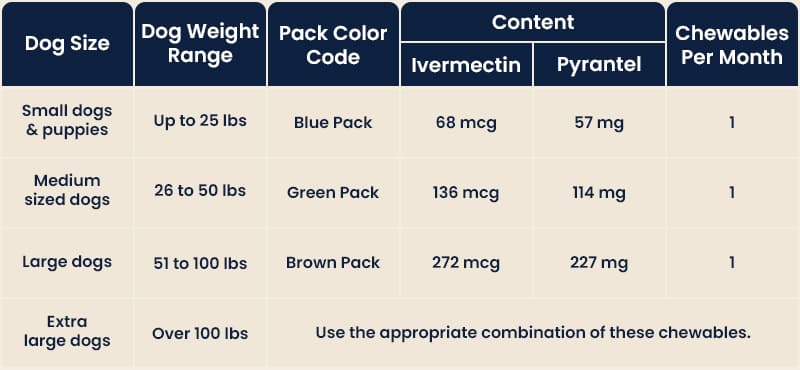
Note: Always select the correct pack based on your dog’s current weight; in any confusion, talk to your veterinarian before administration.
How to Administer HeartGard Plus for Dogs?
Always read and follow the directions strictly mentioned on the label or advised by your veterinarian before administering HeartGard Plus. Here are the simple steps:
- Take one chew from the foil-backed blister card when ready to use.
- Keep the remaining chews in their original box to protect them from direct light.
- Most dogs easily accept HeartGard Plus due to its tasty, real-beef flavor.
- You can offer it to your dog directly by hand.
- The tablet is designed to be chewed, not swallowed whole.
- So, to help you encourage your dog to chew the tablet,
- Chewables can be broken into pieces and fed to dogs.
- Alternatively, you can mix it with a small amount of dog food.
- Supervise your dog to make sure it consumes the complete dose.
- Make sure that no part of the dose is lost or rejected.
- If it is suspected that any part of the dose has been lost, re-dosing is recommended.
When Should You Give HeartGard Plus?
Especially, it should be given at monthly intervals during the period of the year when mosquitoes, potentially carrying infective heartworm larvae, are active.
- The initial dose must be given within 30 days after the dog’s first mosquito exposure.
- Continue the treatment until 30 days after the dog’s last mosquito exposure.
Create a Monthly Dosing Schedule
HeartGard Plus should be administered once a month, preferably on the same date each month, for continuous protection.
Most veterinarians recommend using heartworm prevention year-round. That’s because we assume that our dog needs heartworm preventives only during warm weather when mosquitoes are active. But the risk of heartworms does not go away completely with dropping temperatures. Leaving your dog unprotected during colder months can make them vulnerable to heartworm disease.
Precaution:
All dogs should be tested for existing heartworm infection before starting HeartGard Plus treatment, as it does not eliminate existing adult heartworms. Heartworm-positive dogs must be treated to remove all adult heartworms and microfilariae before starting the HeartGard Plus preventative plan.
Final Thoughts
HeartGard Plus is the most popular and widely used heartwormer for dogs. It should be used as part of a veterinarian-guided heartworm preventive care routine. Most importantly, go for regular vet check-ups and heartworm testing to make sure your dog is doing well throughout the year. Have a direct talk with your veterinarian for any confusion regarding the use of the HeartGard Plus.
Frequently Asked Questions
How can I reduce the risk of heartworm disease in my dog?
The easiest and most effective step you can take is using monthly preventatives, like HeartGard Plus. You can also eliminate existing mosquito habitats around your dog’s surroundings and reduce the outdoor exposure during active mosquito time. Moreover, get your dog tested every year for heartworm.
Can indoor dogs get heartworms?
Yes, infected mosquitoes can easily enter homes through open spaces. Mosquitoes can even breed in indoor standing water. So, the risk of heartworm infection remains present for indoor dogs.
Can heartworm disease be treated?
Yes, heartworm disease can be treated. But advanced heartworm infection can damage your dog’s vital organs, like the heart and lungs, making the treatment more complicated and costlier than preventatives.
What if I miss a dose of HeartGard Plus?
If the dose is delayed beyond 30 days, the efficacy of protection can be reduced. It’s better if you give the chew as soon as you remember and continue your regular monthly preventative plan.
Can I switch from another preventive?
When replacing another heartworm preventive product in a heartworm disease preventive program, you can give the first dose of HeartGard Plus within 30 days of the previous product’s last dose.