


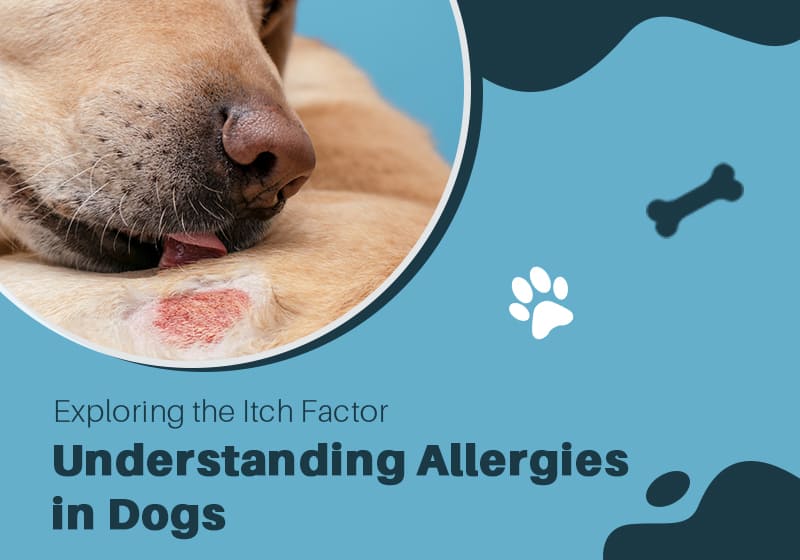
Did you notice rashes on your dog’s skin or find them scratching or chewing their skin? It may be a sign that your beloved furry family member is having an allergy and is experiencing itching. It is normal for dogs to have allergic reactions, just like humans. However, the incessant itching caused by allergies can lead to discomfort and other health problems for your canine friend. That’s why it is necessary to identify the allergy and take steps to provide relief to your dog.
This blog includes information about the types of allergies in dogs, their symptoms, and ways to reduce allergic itching. Give it a read to help your fur buddy deal with the irritating itching.
Why is my dog itchy?
This is one of the most frequently asked questions that troubles pet parents. While occasional itching and brief scratching are not a cause of concern, the excessive and persistent scratching (referred to as pruritus) can be an indicator of an underlying health problem and requires veterinary intervention. One of the reasons for pruritus in dogs can be an allergic reaction.
Allergies in dogs explained
When a dog’s immune system overreacts or is hypersensitive to a particular substance called an allergen, it develops an allergy that can make them feel itchy. An allergy is a normal immune response to a benign foreign substance. Different types of allergies can affect your dog, including:
Flea or insect bite allergy: It is an inflammatory response to an insect bite or sting. Bites from fleas, ticks, mosquitoes, flies, etc., can cause an allergic reaction in dogs. Dogs hypersensitive to flea saliva can develop Flea Allergy Dermatitis (FAD) even from a single flea bite.
Food allergies: Dogs can be allergic to certain foods, which can make their skin itchy. The common food allergens include eggs, corn, wheat, soy, dairy, and animal proteins, like chicken, beef, and pork. Your pet can also be allergic to one or more ingredients of the treatments or preventives you are giving them.
Atopic dermatitis: This type of skin allergy is caused by environmental triggers, like plant pollens, mold spores, dust mites, or other environmental allergens. Your fur friend can suffer from atopy during certain seasons or even year-round.
Contact dermatitis: Contact allergy occurs when your dog’s skin comes into direct contact with substances or irritants like household cleaners, shampoos, plants, insecticides, caustic materials, etc., which leads to itching and inflammation.
Also Read: Apoquel – Best Treatment for Allergic Dermatitis
Symptoms of allergies in dogs
When dogs feel itchy and suffer from an allergy, they will show one or more of the following symptoms:
- Excessive scratching, licking, or chewing in areas, like armpits, belly, rump, and paws
- Red, inflamed, and visibly irritated skin
- Hives or raised bumps on the skin
- Bald patches or thinning of the coat as a result of excessive scratching
- Moist and painful sores or hot spots
- Red and itchy ears
- Irritation and/or restlessness
How to reduce allergic itching?
Untreated allergies and pruritus may not be life-threatening, but they can jeopardize your fur friend’s health in many ways and thus require your prompt attention. Once your veterinarian has examined your dog and diagnosed the cause, they will recommend the necessary treatment. Some of the ways to relieve your dog’s itchy skin include:
- Bathe your canine companion with an itch-relief shampoo or use soothing oils (like coconut oil) to provide temporary relief from the itchy feeling.
- Use flea and tick treatments for dogs to treat parasite infestations and avoid flea allergies in your pet. Oral treatments like Nexgard Chewables and Simparica Trio Chewable Tablets help protect dogs against multiple parasites. Administer parasite preventives regularly to ensure your dog’s year-round protection.
- Follow an elimination/reintroduction diet technique to find out the source of your dog’s food allergy. Permanently eliminate the allergens that cause allergy in your dog to resolve the allergy symptoms.
- Antihistamines do not offer much relief, but may be effective in treating atopic dermatitis. However, use them only when suggested by your veterinarian.
- Remove the substances your dog is allergic to from their surroundings to safeguard them from contact dermatitis.
- You may use topical sprays and solutions that contain hydrocortisone to ease the itching.
To know more about the ways to reduce itching in dogs, read How to Treat Your Dog’s Itchy Skin?
Final words
It hurts to see our canine friends itch and scratch uncontrollably. When the reason for this itch is an allergy, the aforementioned information about dog allergies will be helpful. While there is no permanent solution for allergies and it is a lifelong problem, taking the right steps under the guidance of a veterinarian can definitely help provide much-needed relief to your four-legged friend.